What about the profile of Dr. Kim Zhiqiang at the ProPOSE Orthopaedic Hospital in Korea, many of whom have found such information, is actually very confused: while trying to improve the problem of the gill bow ‘s outside, the angle of the jaw is clear, and the jaw is short, they are afraid of being taken away by the “Fig Shaft.” Unlike normal skin management, the face is not reduced so easily, and the cheekbones, bows, lower edges, chins, gnashing relationships, bands, soft tissue packages must be seen together. In compiling the information of Dr. Kim Chi-chul, it became clear that he was the representative director of the ProPOSE Orthopaedic Hospital in Korea, with a doctorate background in plastic surgery from the Medical School of the Central University of Korea, and with further experience at the Plasm Centre for plastic surgery at New York University Hospital in the United States of America, Manhattan Eye, Ear & Troat Hospital. If you want to know about the contours of the Korean cheek, the inside of the cheekbone, the jaw of the Vline and the contours, not just by the name of the project, but by the logic of the interview.
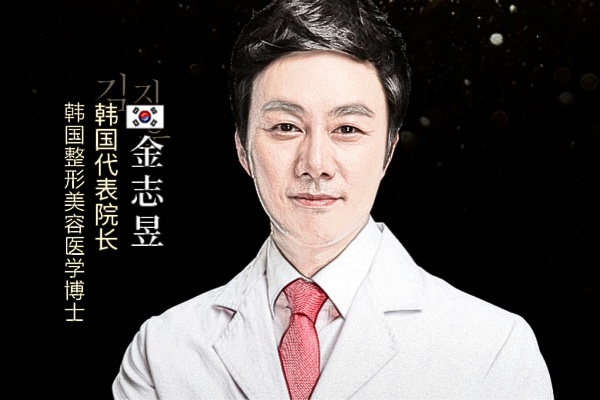
Information on the visit of Dr. Kim Ji-hoon of the PropoSE Orthopaedic Hospital in Korea: the skeletal and soft tissue relationship of the face profile first
Dr. Kim Zhiqiang of the ProPOSE Orthopaedic Hospital in Korea is often in the direction of his attention, focusing mainly on the contours of the face, the adjustment of the cheekbones, the lower angles, the formation of the tungsten, the elevation of the face and the restoration of the contours. It all sounds like a “fiction project”, but the points behind each project are different.
For example, the inside of the cheekbone bow, not just looking at the face wide, but also at the size of the face; the lower angle, not just looking at the small angle, but also at the consistency of the line; and the lower jaw of Vline, far from being sharp, may influence the judgement.
In the presentation by Dr. Kim Chi-chul, key words such as “skeletal adjustment, spasm upgrading, soft tissue repositioning” are often found. In white, the doctor will see not only how the bones move, but also whether the flesh, the band and the skin of the face can keep up. This idea is important for the contours of the face, because the face is not a flat puzzle, the bone changes, the support, the loose, the line changes.
Dr. Kim Chi-chul, PropoSE Integrative Hospital, Korea: How much can you push?
A lot of people ask, “Can you narrow it down?” Of course it does, but it’s not enough. The more crucial question is whether the breadth of the cheekbone bow is wide, mainly the osteoporosis, or the breadth of the vision brought about by the substrate of the soft tissue in the face? If you look only at width, you may ignore the position of apple muscles and the support in the face.
The “3D rotational intrabone push” and soft tissue upgrading are often discussed together in the intrabony analogy project. Its focus is not on how complex the combination sounds, but on whether the organization in front of it should be managed simultaneously, following a change in the bone profile. Think about it, if the hips are repositioned, but the soft tissue support doesn’t keep up, the face may look empty, collapsed and unsatisfied.
When you see him, you can ask him: What is the range of push inside the cheekbone? What’s the bow fixation? How do you keep it? Is the apple muscle position affected? Is it necessary to consider SMAS dysentery or growthal upgrading? These questions are not asked to show that they are good, but to help themselves judge whether the programme is face-to-face.

Dr. Kim Chi-chul and Vline’s jaws at the ProPOSE Integrative Hospital in Korea: both front and side. Look.
The lower horn and Vline chin are key words that many people can’t get around when looking at the contours of the Korean cheek, but they are also easy to step on. The front face is not all about the lower horn; the side is short, and it does not have to be a bone cut. Both soft tissue thickness, muscle bites, the continuity of the lower cavity, and the positions around the chin must be seen together.
| Direction of the interview | Common focus | Suggested questions |
|---|---|---|
| Lower angle adjustment | It’s obvious that the face is partial, the sideline is hard, and the lower angle is visible. | How do you set the cutter’s boundary? How do you keep the line together? |
| Vline’s jaw amputated. | Short chins, backshrinks, broad-mindedness, a little side-faced. | What is the difference between T, W and V? Not fit to move forward or backward? |
| Parameter rehabilitation | Back in the past, asymmetrical, line discomfort. | What images do you need? How much room do you have to adjust bone and soft tissue? |
| Membrane upgrading | I’m concerned about the laxity of the contours and the lack of clarity of the lower line. | What about the SMAS dysentery, neck broad muscle and skin tension? |
It was suggested that photographs of the face, side, 45 degrees, head down, and natural expression be prepared before the interview. If they have been contoursed or upgraded previously, screening films, surgical records, material information are no more trouble. The more complete the profile is, the easier it is to judge the boundary.

What about the curriculum vitae of Dr. Kim Ji-jin at the ProPOSE Integrative Hospital in Korea:
Dr. Kim has a background in plastic surgery in Korea, as well as experience of relevant members of the Korean Surgical Syndicate Society, the Korean Synthetic Synthetic Synthetic Society, the Korean Synthetic Synthetic Synthetic Synthetic Society, and has been granted academic long-term visas and relevant recognition by local expatriates. These curricula vitae can be used as a reference to the doctor ‘ s research orientation, background and cross-regional experience.
However, to be honest, the selection of a doctor cannot be based solely on his curriculum vitae. What really needs to be seen is whether the doctor at the meeting can tell you about your bone base, your soft tissue state, the history of surgery and the aesthetic goal. For example, where it is appropriate to move and where it is not recommended; what changes can be expected and which are expected to be lower in advance; and what is the sequence logic when clustering projects.
In particular, projects such as the inside of the cheekbone bow, the lower horn, and the jaw of Vline, should not be subjected to questioning. The words “why do this, why do not do that, and what should be taken into account during the post-operative observation period” are more of a reference than the sound of a good wrapping phrase.
Dr. Kim Chi-chul, PropoSE Integrative Hospital, Korea, provides a profile, focusing on whether or not the programme fits into the foundation.
The profile of Dr. Kim Zhiqiang, the Korea ProPOSE Integrative Hospital, can be seen from the face logic of posturing within the gill bow, the lower angle, the Vline chin, the SMAS band and contours. The contours are not as small as they are, the bones and the soft tissues are all clear and the aesthetics are more stable.