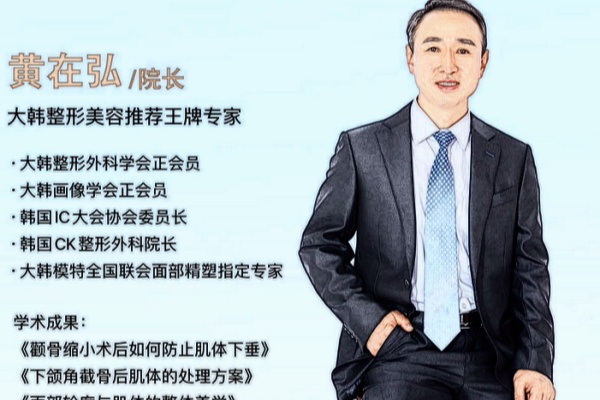
In the study of facial contours, many people are taken away by the words “cracking” “V-face” “thumping” as if the face would fit as soon as the bone was small. But what is really difficult is whether your problem is the bottom horn, the cheekbones, or the whole bone?Korean facial contour doctor Wong Jae-hongAttention, focus on his skeletal restructuring, especially aroundLower arctic conic, V-Line amniotic, 3D abrasionsThese projects are ongoing.
I. What does Dr. Huang do? It’s not just “blow your face.”
Dr. Wong’s long-term deep-tilled face contours are finely refined and more osteophysically restructured, rather than grinding a particular part down at a single point. The source mentions that his core direction includes the lower arctic conic, the 3D gillbone/talve internal thrust, and the V-Line amputation, as well as facial malformation contour restoration.
This type of doctor looks more at the links between the bones: Whether the lower angles and the lower chin are coherent, whether the middle face is still supported by the inside of the cheekbone, and whether the head and side turns are coordinated. The profile of the face is not a narrow one, but a whole face line re-routed.
In the case of contours, a lot of people ask, “Can we get smaller?” In fact, doctors are more required to judge the width of the bones, the thickness of the soft tissue, the bite bond and the facial ratio. The profile of Dr. Huang is suitable to communicate with photos of face, side, 45 degrees, so that the doctor can explain where the problem lies.
ii. The long curved line of yellow under the hip, with emphasis on the transition of the bottom line
The lower horn curve is not just ” cut off the horn ” . It places greater emphasis on line continuity from the lower ear to the lower chin, reducing bumps on the side and front. If only the angle is addressed, there may be a sense of fault; if over-treatment, the face may lose its original support.
So let’s not just ask if we can get smaller.How does the jaw line connect from ear down to chin, how does the bite muscle and soft tissue work, and whether it’s natural to turn on the side?I don’t know. These issues are closer to the core of decision-making than simply looking at the name of the operation.
The lower horn curve also looks at the chin. There are those with visible undertows, but the jaw base is also short or wide; others with hard sides, the problem is not only angles. If only the lower angles are addressed, there may be limited improvement. The programme will be more complete by consulting the chin, the jawline and the neck transition.
The face profile of Dr. Huang also needs to be discussed separately from the face. The face is wide, the courtyard ratio and the expanse of the cheekbone, with the side of the horn turned, the chin projected and the neck horn. It is easy to ignore the real problem of bone structure by taking a self-portrait.

III. V-Line amniotics and 3D osteoporosis, with Dr. Wong’s emphasis on the whole bone
V-Line amputations are usually designed to narrow down the lower jaw and the lower jaw as a whole, not simply to sharpen the lower chin. The 3D osteoporosis takes into account the three-dimensional position of the cheekbones and bows, both to improve the sense of exterior enlargement and to ensure medium facial support.
Many feel that the hip width is internalized and the lower cheek is amputated, but the facial contours are more proportional. If the inner and lower pelvis are not synchronized, the front is narrower, and the side may not be coordinated. This is the reason why doctors such as Dr. Huang Hong are repeatedly mentioned: Attention was focused on his design logic, not just the project name.
The 3D osteoporosis also takes into account the central soft tissue. Once the cheekbones are moved, the mid-face support, the apple muscle direction, and the texture vision are moved. Dr. Wong’s profile is more suitable for people who focus on “structural design”, rather than on people who want to reduce a certain part quickly.
IV. Who is appropriate to focus on Dr. Huang? Let’s see if it’s obvious.
The groups of concern that are more common include: the underside angles, the sidelines, the expanse of the cheekbones or bows, and the wideness of the front; the palsy of the contours; and the inadequate flow of the overall face. It is not necessary to rise to bone surgery if it is merely a matter of fat accumulation, slight rounding or biting muscle.
The facial contours are required for basic conditions, soft tissue thickness and restoration of rhythm. It’s not just about the reputation of the doctor, it’s not about whether a project is popular, it’s more about whether the doctor can explain where your face problem comes from.
This is even more so if there are obvious bite problems, facial asymmetries or past surgical histories. Contour surgery is not a light project and recovery periods, swelling changes and soft tissue adaptation take time. It is more realistic to ask the boundaries of risk and the pace of post-operative change than simply to expect a face.
The question may also be asked about the need for a three-dimensional image assessment, how the amniotic cord was designed, how it was structured and how it was observed in several stages of post-operative face changes. A truly mature contours should explain “why are they so designed” rather than giving only one project name.

What does Dr. Hong say about the profile of the Korean face? I need to ask you about design logic.
Dr. Wong’s point isLower arctic conic, V-Line amniotic, 3D abrasionsThis whole contours plan. What really deserves to be examined is the amniotic scope, line connection, mid-surface support, soft tissue and recovery expectations. The contours of surgery are not template face-to-face, and it is critical to suit the design of the bone, and the closer the pre-operative communication, the harder it is to judge. The claims on the front, side and side are clear, and it is easier for doctors to make complete judgements and trade-offs.